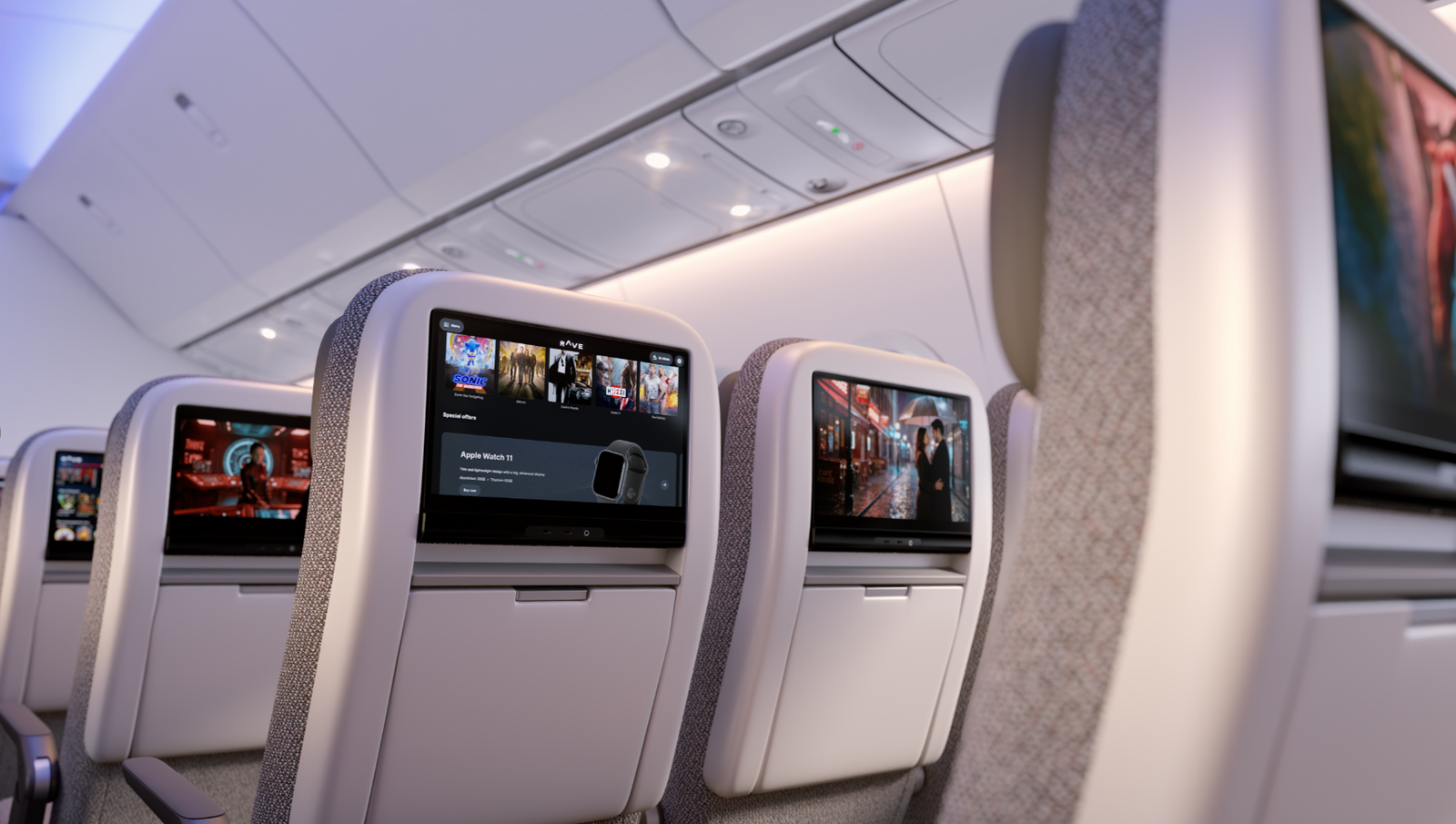
A next-generation in-flight entertainment system, built within an open platform.
A working GUI concept built for RAVE’s Open Platform, showcased at Aircraft Interiors Expo 2026.
My Role
Product Design
Collaborators
RAVE x Reaktor
Timeline
9 months
RAVE Aerospace partnered with design agency Reaktor to explore the future of passenger-facing experiences within the RAVE Open Platform.
The goal was to create a working GUI concept that demonstrated how third-party teams could build modern, configurable IFE experiences within RAVE’s existing platform architecture.
I collaborated with the RAVE and Reaktor teams to design an interface that balanced a contemporary passenger experience with the technical and operational constraints of an airline-grade system.
The Challenge
Designing for an aircraft is different from designing for a typical digital product. The experience needs to be immediately understandable, work across a wide range of passengers and use cases, and operate within a highly constrained technical environment.
At the same time, RAVE’s Open Platform needed to demonstrate its flexibility. The GUI couldn’t be designed as a one-off experience for a single airline. It needed to establish a flexible foundation that could adapt to different brands, content, and passenger experiences.
How might we create a modern, passenger-first IFE experience that is both engaging for travelers and flexible enough to work across RAVE’s ecosystem?
Research & Discovery
Before defining the interface, we looked at how passengers already interact with our current RAVE OS product and how those behaviors could translate to the aircraft environment.
Our research focused on three areas.
👤 Passenger research
🔍 Internal observation
✈️ Airline insights
Surveyed passengers through UserTesting to understand expectations, behaviors, and pain points with IFE.
Observed internal users interacting with the existing system to identify usability issues and recurring behaviors.
Spoke with airline stakeholders to understand their priorities, requirements, and vision for the future IFE experience.
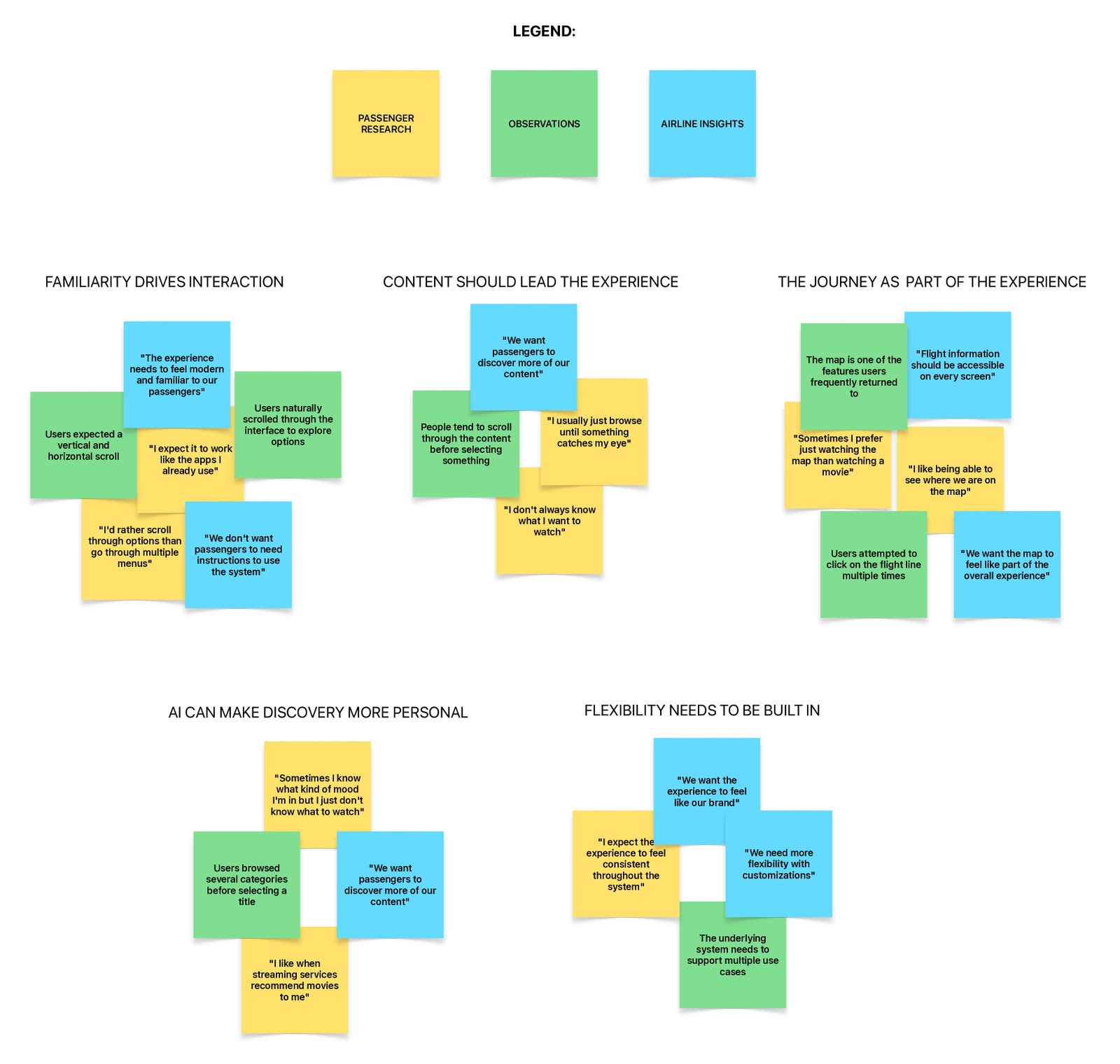
Key Insights
Our research highlighted an opportunity to make the IFE experience feel more familiar, intuitive, and engaging while taking advantage of the flexibility of the RAVE Open Platform.
These insights became the foundation for the experience we designed.
👤 01 — Familiarity drives interaction
People are accustomed to intuitive navigation, visual content discovery, and familiar interaction patterns from their phones, tablets, and streaming services.
→ Leverage established patterns rather than asking passengers to learn an entirely new interaction model.
🎬 02 — Content should lead the experience
With large content libraries, browsing needs to feel visual, engaging, and easy to scan.
→ Prioritize content discovery through visual rails, recommendations, and clear hierarchy.
✈️ 03 — The journey is part of the experience
Passengers also want to understand where they are, track their progress, and access useful information throughout the flight.
→ Integrate flight context and utility alongside entertainment rather than treating them as separate experiences.
✨ 04 — AI can make discovery more personal
AI creates an alternative to traditional browsing by allowing passengers to describe what they’re looking for and receive relevant recommendations.
→ Introduce conversational discovery alongside traditional navigation, giving passengers more than one way to find content.
🧩 05 — Flexibility needs to be built in
Airlines have different brands, content libraries, priorities, and passenger needs.
→ Build a scalable system that allows experiences to be customized without reinventing the underlying interface.
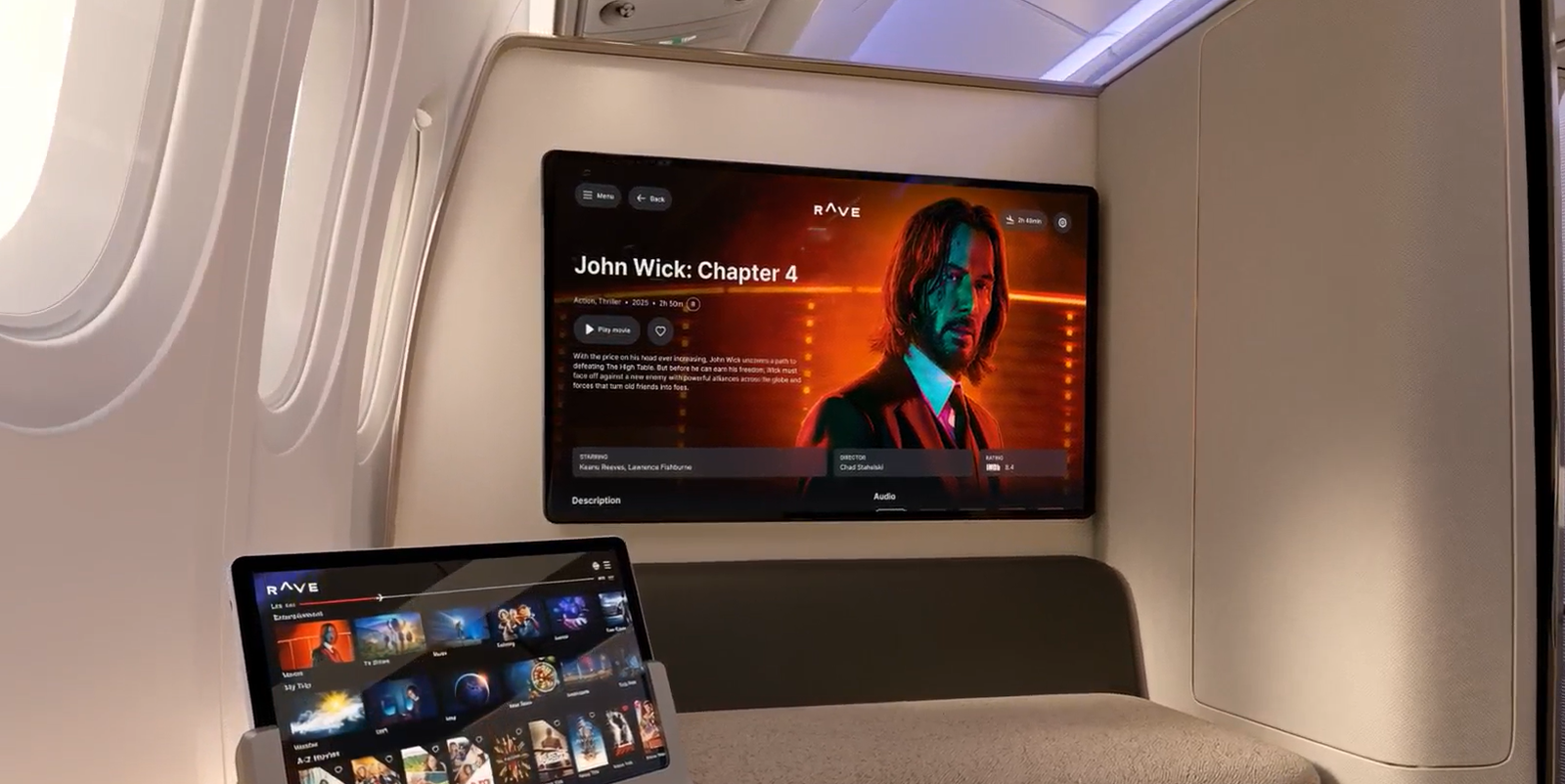
The Experience
With the foundation established, we translated the principles into a cohesive passenger experience across the RAVE Next Generation GUI.
The interface was designed around two complementary parts of the passenger journey: understanding the journey and enjoying it. The live map provides a sense of place and progress, while entertainment and utility features remain easily accessible throughout the experience.
Rather than treating each screen as an isolated interface, we designed a connected system where navigation, content discovery, and flight information work together throughout the passenger journey.

01. A Homescreen Built Around the Journey
The home screen was designed to give passengers an immediate sense of their journey while providing quick access to the rest of the IFE experience.
At the center of the experience is a live moving map, giving passengers a visual connection to their current location and progress throughout the flight. Surrounding the map, quick-access entertainment widgets and our AI search bar.
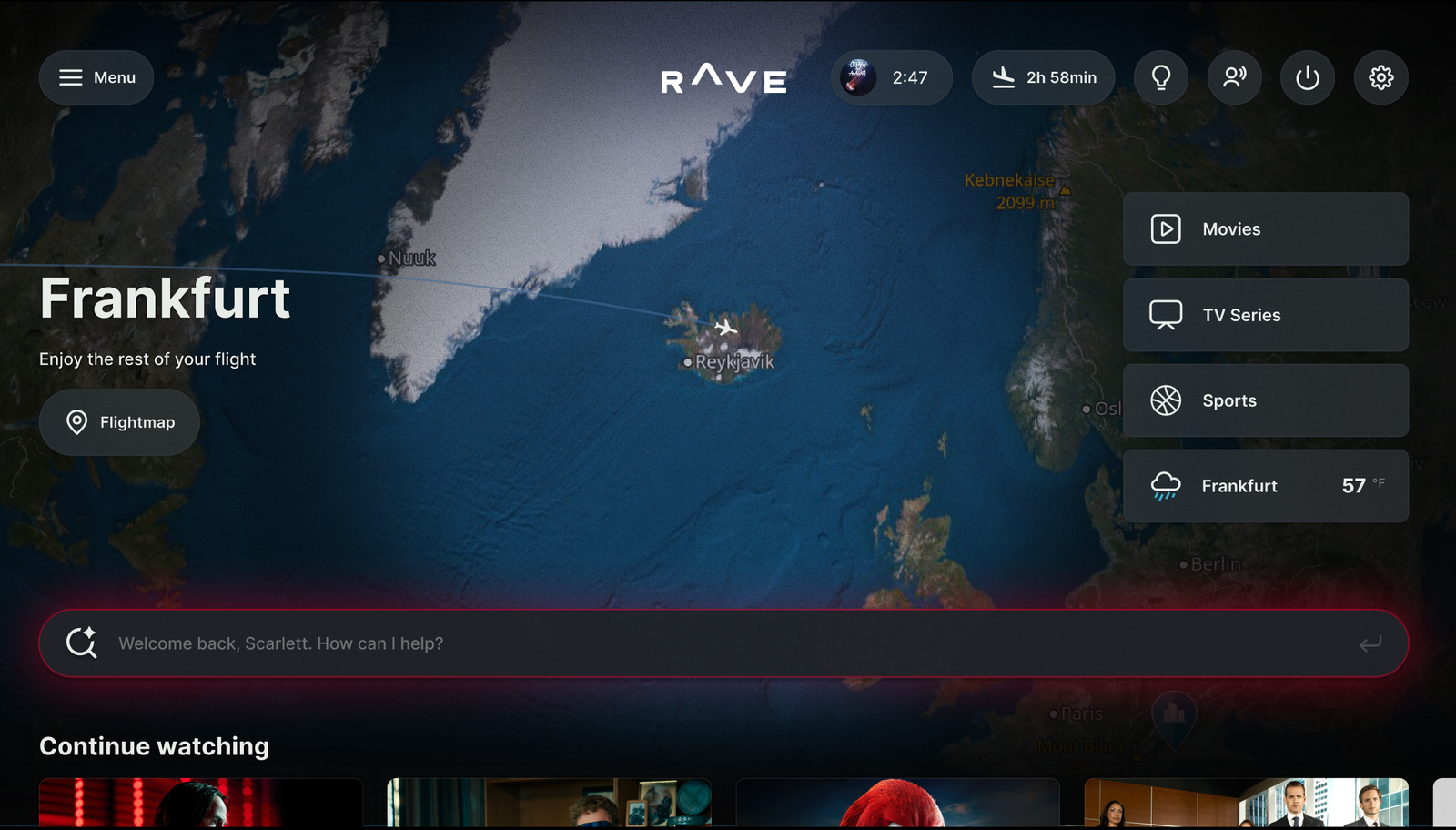
This creates a balance between journey awareness and entertainment discovery: passengers can see where they are, understand their progress, and jump directly into something to watch or listen to.
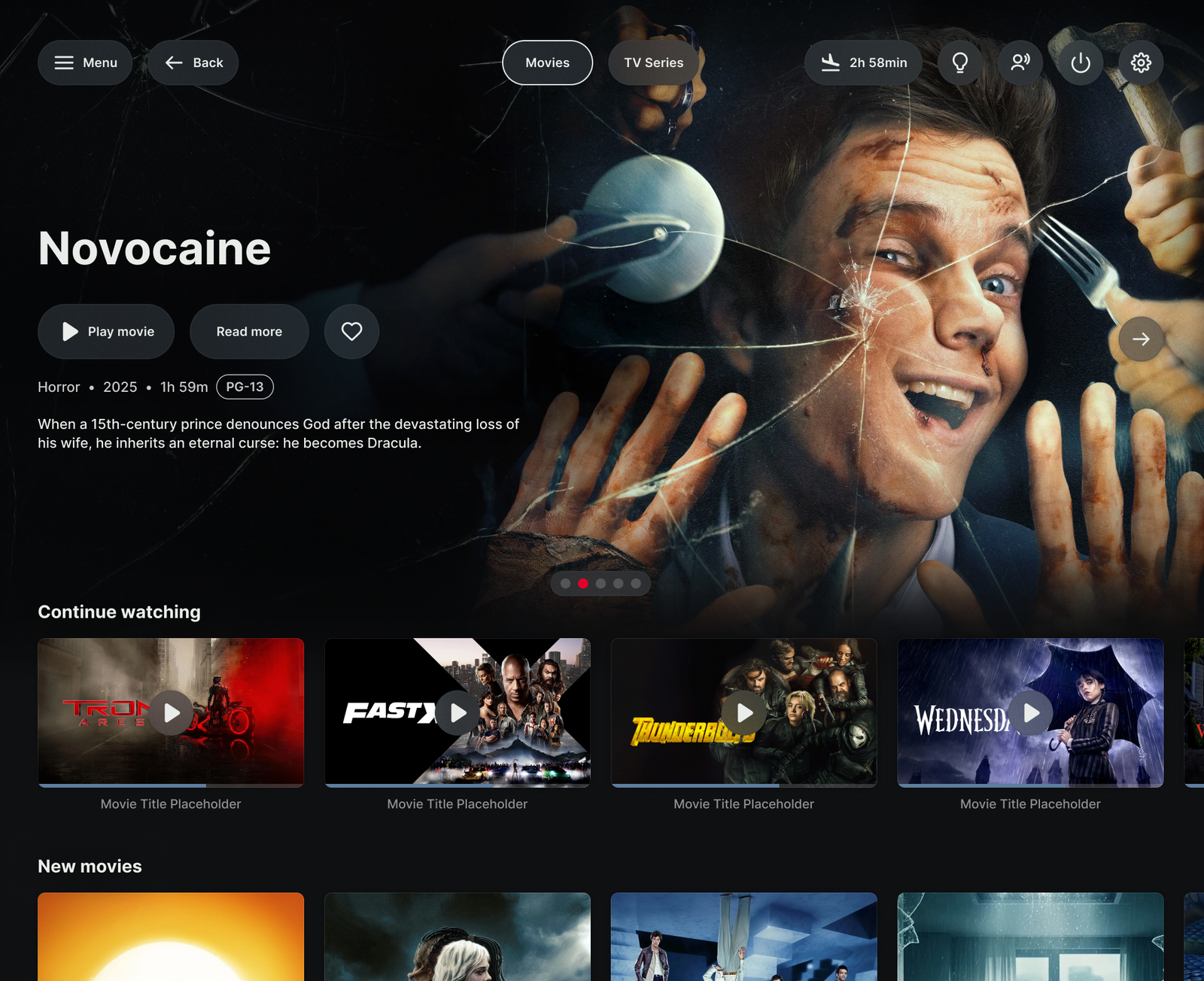
02. Familiar Entertainment Discovery
For entertainment discovery, we drew inspiration from familiar OTT platforms such as Netflix, using a rail-based browsing system to make a large content library feel intuitive and easy to explore.
Content is organized into horizontal rails based on categories, recommendations, and curated selections, allowing passengers to quickly scan what is available and dive deeper into content that interests them.
By applying interaction patterns passengers already recognize from streaming services, we aimed to make the transition from browsing to selecting content feel familiar, while adapting the experience to the unique context of an in-flight entertainment system.
03. AI-Powered Discovery
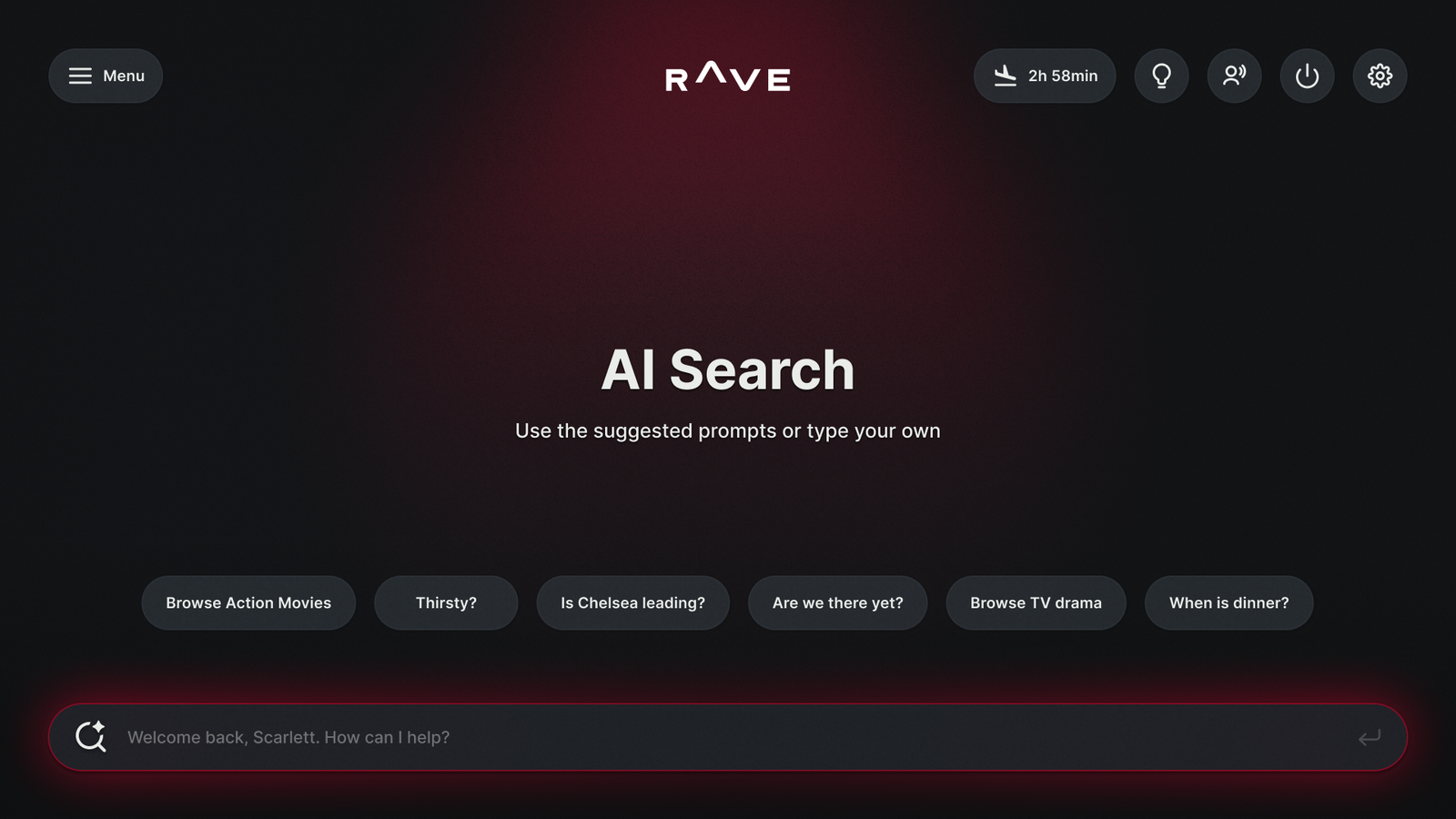
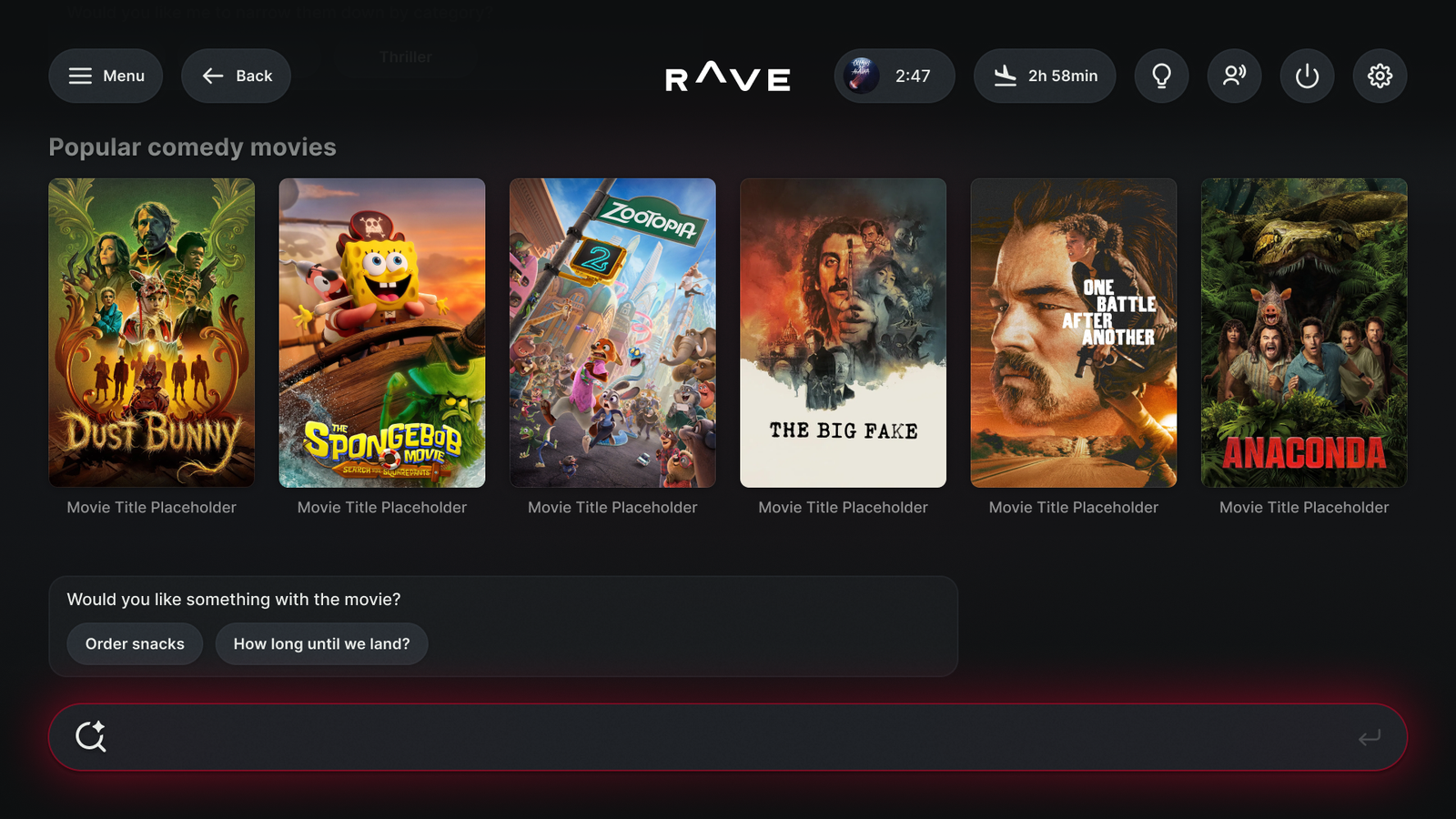
Traditional IFE browsing assumes passengers know what they’re looking for. But sometimes the hardest part is simply deciding what to watch.
We explored AI as an alternative way into the content library, allowing passengers to describe what they’re in the mood for and receive recommendations tailored to their request.
Instead of navigating through categories, passengers can use natural language to express an intent, such as a mood, genre, or type of experience they’re looking for.
This creates a second discovery model alongside traditional browsing:
Browse → Discover
and
Describe → Recommend → Discover
The AI experience was designed to complement the existing interface rather than replace it. Passengers can choose the interaction model that feels most natural to them.
04. One System, Built to Adapt
Underneath the individual screens is a flexible UI framework designed to support different airline brands, content priorities, and passenger experiences.
Components, layouts, and interaction patterns were designed to work together as a system, allowing the experience to evolve without requiring the interface to be redesigned from scratch.
This balance between consistency and configurability was central to the project and to demonstrating the potential of the RAVE Open Platform.
Highlights
🤝 Agency Collaboration
Worked alongside Reaktor to design a next-generation IFE experience within RAVE’s existing platform.
🧩 Scalable UI
Created flexible components and patterns that could adapt across airlines, content, and use cases.
🚀 Real-World Impact
Contributed to a working GUI concept showcased at Aircraft Interiors Expo 2026.
Outcome
The final concept became Harmony, a working demonstration of the RAVE Next Generation GUI.
Rather than remaining a static design concept, the experience was built within the RAVE Open Platform and demonstrated how external teams could create production-level interface experiences within the ecosystem.
Harmony was showcased at Aircraft Interiors Expo 2026, giving RAVE a tangible proof point for its Open Platform vision and a foundation for exploring the future of its passenger experience.